July Family Letter
Bracher Brown- “Scott Brown can frequently be heard saying “we need to share this with clients” during internal meetings. Like any good son, I have ignored him long enough to now claim the idea as my own.”
This month we wanted to invite you into our Investment Committee meeting – Once a month, we sit down for a meeting led by our own Taimi Bek to discuss overall economic trends, sector analysis, and the portfolios themselves. Because of the account sensitive nature of those discussions, we have recreated a compliance friendly overview of last month’s meeting to share with you. Our hope with this content is to give you a little more insight into the construction of the portfolios and the considerations that go into their ongoing maintenance. If you find this conversation to be of interest, and have questions or want to discuss further, Taimi is always available to you.
From Taimi Bek
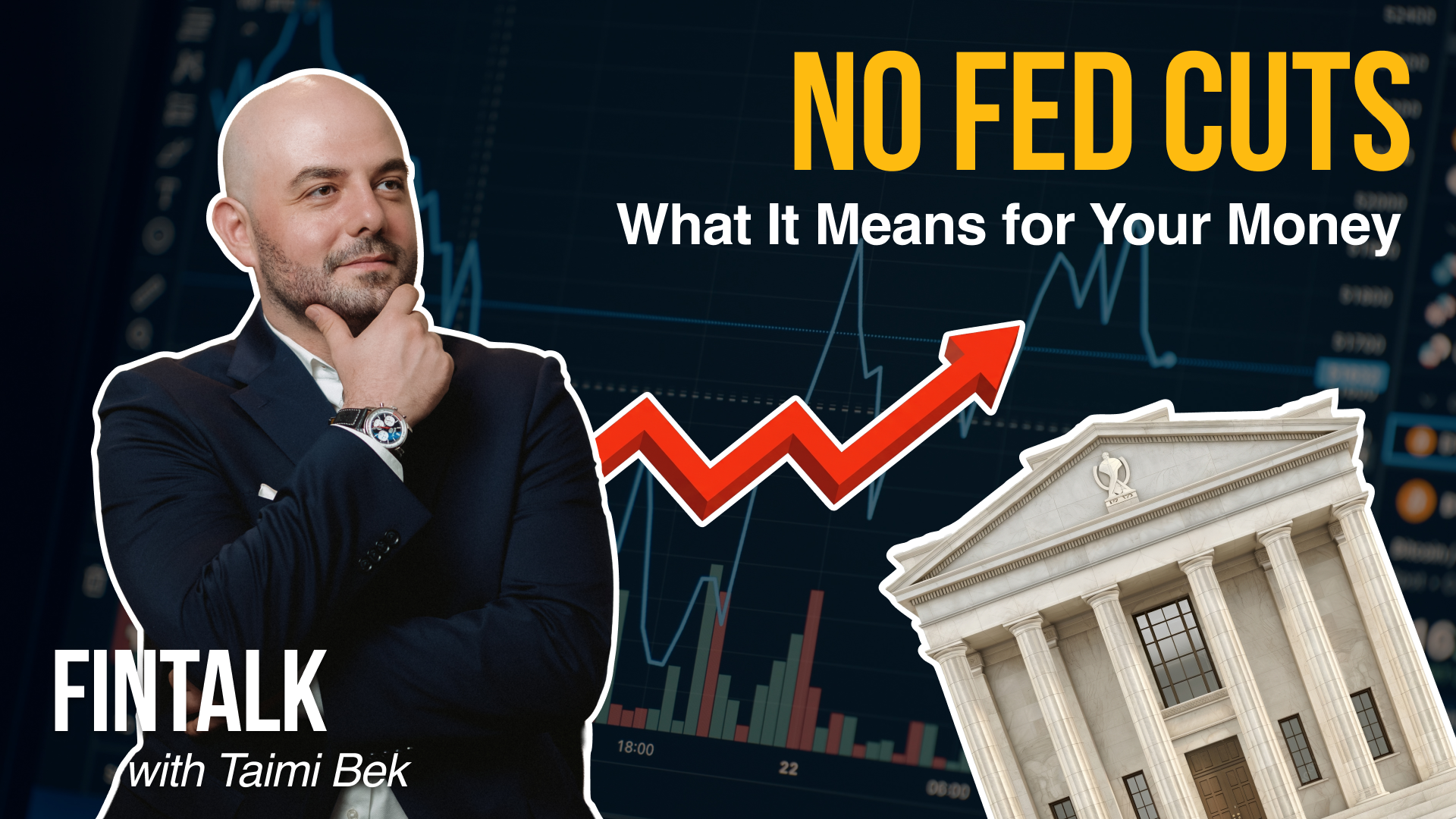
Fixed Income Outlook 2026: Navigating a Hawkish Reset
For the last two years, the Fed has been flying in heavy crosswinds. Its dual mandate pulled in opposite directions: inflation refused to settle back at 2% while labor markets stayed strong enough to undercut any clean case for cuts. On top of that, fiscal “noise” made the true policy mix hard to read — headline claims of massive spending cuts contrasted with only modest, verified savings, and attempts to strip government spending from GDP muddied already-contested data. In short, the Fed has been navigating by instruments it couldn’t fully trust.
That context makes the Warsh Fed consequential. Kevin Warsh’s confirmation in May 2026 came with political drama, but the market takeaway from his first FOMC meeting in June was straightforward: expectations for a dovish pivot were misplaced. The committee delivered a fourth consecutive hold at 3.50%–3.75%, yet the statement shrank and shed easing signals, and the dot plot shifted hawkish, the median year-end funds rate projection moved up to 3.8%, with roughly half the committee penciling in at least one hike and a meaningful minority seeing two. Inflation projections were revised higher, and upside risk was explicitly acknowledged. The message wasn’t “cuts are coming,” it was “we’re prepared to tighten again if inflation doesn’t cooperate.”
Bond markets, meanwhile, are acting as if discipline will hold. Investment grade corporate spreads have ground tighter, with the ICE BofA U.S. Corporate Index OAS in the 70s bps and A-rated yields hovering a bit above 5%.
Default rates remain very low, fallen-angel activity is below long-run norms, and issuance is robust, a combination that says allocators still believe credit can behave even as the rate path becomes more uncertain. Municipals tell a similar story: sharply lower default volumes, net upgrades, and a steep curve creating compelling after-tax income for patient investors. The catch is rising dispersion, especially for issuers tied to shifting federal transfers and budget politics. In both corporates and munis, credit work is no longer optional.
To make this more concrete, consider three A-rated corporate portfolios, each with $100,000 face value across 10 maturities from 2031 to 2040: right-tilted, left-tilted, and flat. Under a single 50 bps hike in December 2026 and a mark-to-market snapshot in July 2027, credit quality and notional are identical; only duration distribution changes. The result: the right-tilted portfolio, loaded at the long end, posts the weakest total return at roughly +2.2%; the left-tilted, concentrated in shorter maturities, delivers about +2.7%; and the flat allocation lands in between near +2.5%. All three are still positive, coupon income more than offsets price pressure but the dispersion is entirely about how you position along the curve.
That’s the practical takeaway for 2026. With a hawkish reset in play, a single hike isn’t likely to break a well-constructed bond portfolio. What will matter more is how you balance duration against reinvestment risk and how rigorously you manage credit. The right tilt is an intentional bet on extended income; the left tilt is a bet on flexibility and lower volatility. The flat profile trades optimization for simplicity and explainability. In this environment, the edge isn’t in trying to outguess every dot on the plot, it’s in owning the risk you’re taking and making sure the credit underneath your duration posture can live through whatever the Fed ultimately decides to do.

Disclaimer: Every investor’s situation is unique, and you should consider your investment goals, risk tolerance and time horizon before making any investment. Prior to making an investment decision, please consult with your financial advisor about your individual situation. The foregoing information has been obtained from sources considered to be reliable, but we do not guarantee that it is accurate or complete, it is not a statement of all available data necessary for making an investment decision, and it does not constitute a recommendation. The forgoing is not a recommendation to buy or sell any individual security or any combination of securities. The stock indexes mentioned are unmanaged and cannot be invested into directly. Past performance is no guarantee of future results. The S&P 500 is an unmanaged index of 500 widely held stocks that is generally considered representative of the U.S. stock market. There is no guarantee that these statements, opinions or forecasts provided herein will prove to be correct. Any opinions are those of Taimi Bek and not necessarily those of Raymond James. You should discuss any tax or legal matters with the appropriate professional.
July Family Letter
Bracher Brown- “Scott Brown can frequently be heard saying “we need to share this with clients” during internal meetings. Like any good son, I have ignored him long enough to now claim the idea as my own.”
This month we wanted to invite you into our Investment Committee meeting – Once a month, we sit down for a meeting led by our own Taimi Bek to discuss overall economic trends, sector analysis, and the portfolios themselves. Because of the account sensitive nature of those discussions, we have recreated a compliance friendly overview of last month’s meeting to share with you. Our hope with this content is to give you a little more insight into the construction of the portfolios and the considerations that go into their ongoing maintenance. If you find this conversation to be of interest, and have questions or want to discuss further, Taimi is always available to you.
From Taimi Bek
Fixed Income Outlook 2026: Navigating a Hawkish Reset
For the last two years, the Fed has been flying in heavy crosswinds. Its dual mandate pulled in opposite directions: inflation refused to settle back at 2% while labor markets stayed strong enough to undercut any clean case for cuts. On top of that, fiscal “noise” made the true policy mix hard to read — headline claims of massive spending cuts contrasted with only modest, verified savings, and attempts to strip government spending from GDP muddied already-contested data. In short, the Fed has been navigating by instruments it couldn’t fully trust.
That context makes the Warsh Fed consequential. Kevin Warsh’s confirmation in May 2026 came with political drama, but the market takeaway from his first FOMC meeting in June was straightforward: expectations for a dovish pivot were misplaced. The committee delivered a fourth consecutive hold at 3.50%–3.75%, yet the statement shrank and shed easing signals, and the dot plot shifted hawkish, the median year-end funds rate projection moved up to 3.8%, with roughly half the committee penciling in at least one hike and a meaningful minority seeing two. Inflation projections were revised higher, and upside risk was explicitly acknowledged. The message wasn’t “cuts are coming,” it was “we’re prepared to tighten again if inflation doesn’t cooperate.”
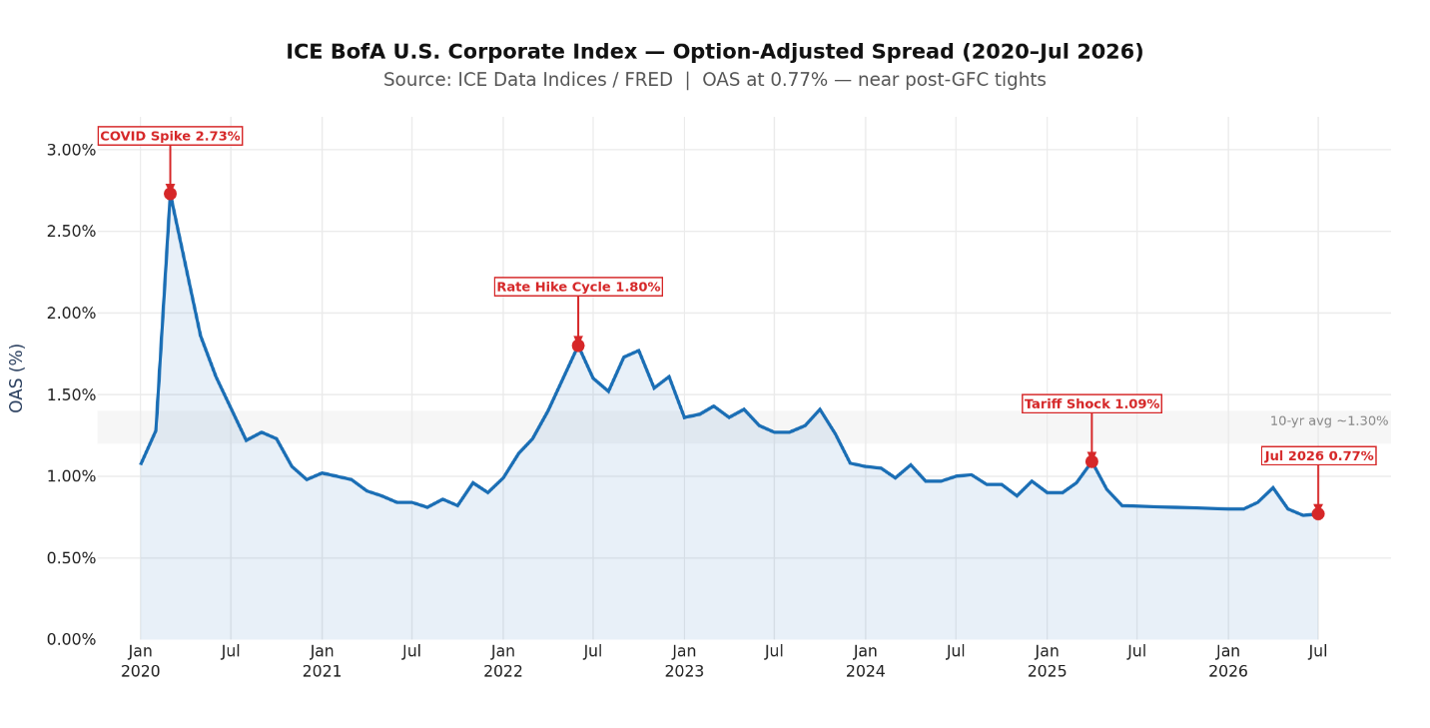
Bond markets, meanwhile, are acting as if discipline will hold. Investment grade corporate spreads have ground tighter, with the ICE BofA U.S. Corporate Index OAS in the 70s bps and A-rated yields hovering a bit above 5%.
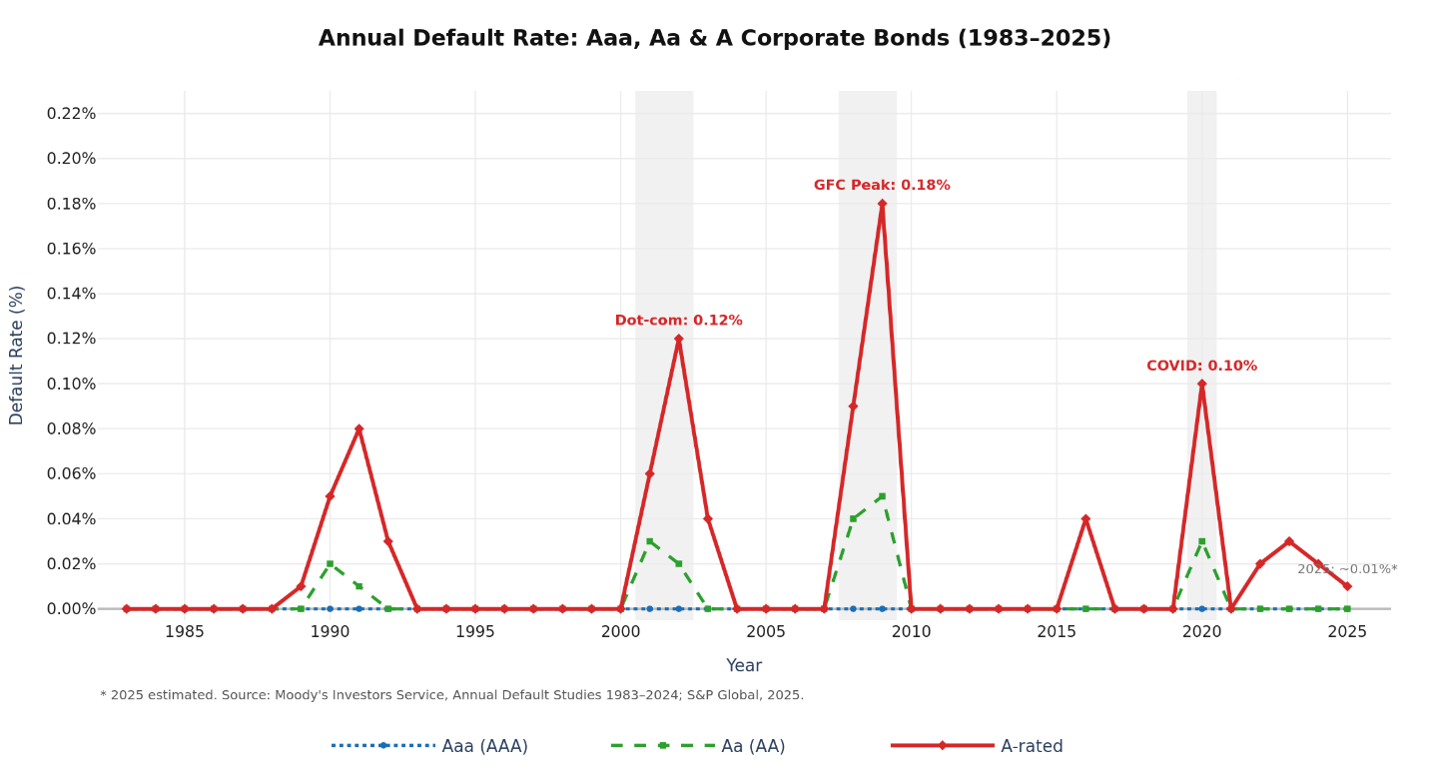
Default rates remain very low, fallen-angel activity is below long-run norms, and issuance is robust, a combination that says allocators still believe credit can behave even as the rate path becomes more uncertain. Municipals tell a similar story: sharply lower default volumes, net upgrades, and a steep curve creating compelling after-tax income for patient investors. The catch is rising dispersion, especially for issuers tied to shifting federal transfers and budget politics. In both corporates and munis, credit work is no longer optional.
To make this more concrete, consider three A-rated corporate portfolios, each with $100,000 face value across 10 maturities from 2031 to 2040: right-tilted, left-tilted, and flat. Under a single 50 bps hike in December 2026 and a mark-to-market snapshot in July 2027, credit quality and notional are identical; only duration distribution changes. The result: the right-tilted portfolio, loaded at the long end, posts the weakest total return at roughly +2.2%; the left-tilted, concentrated in shorter maturities, delivers about +2.7%; and the flat allocation lands in between near +2.5%. All three are still positive, coupon income more than offsets price pressure but the dispersion is entirely about how you position along the curve.
That’s the practical takeaway for 2026. With a hawkish reset in play, a single hike isn’t likely to break a well-constructed bond portfolio. What will matter more is how you balance duration against reinvestment risk and how rigorously you manage credit. The right tilt is an intentional bet on extended income; the left tilt is a bet on flexibility and lower volatility. The flat profile trades optimization for simplicity and explainability. In this environment, the edge isn’t in trying to outguess every dot on the plot, it’s in owning the risk you’re taking and making sure the credit underneath your duration posture can live through whatever the Fed ultimately decides to do.